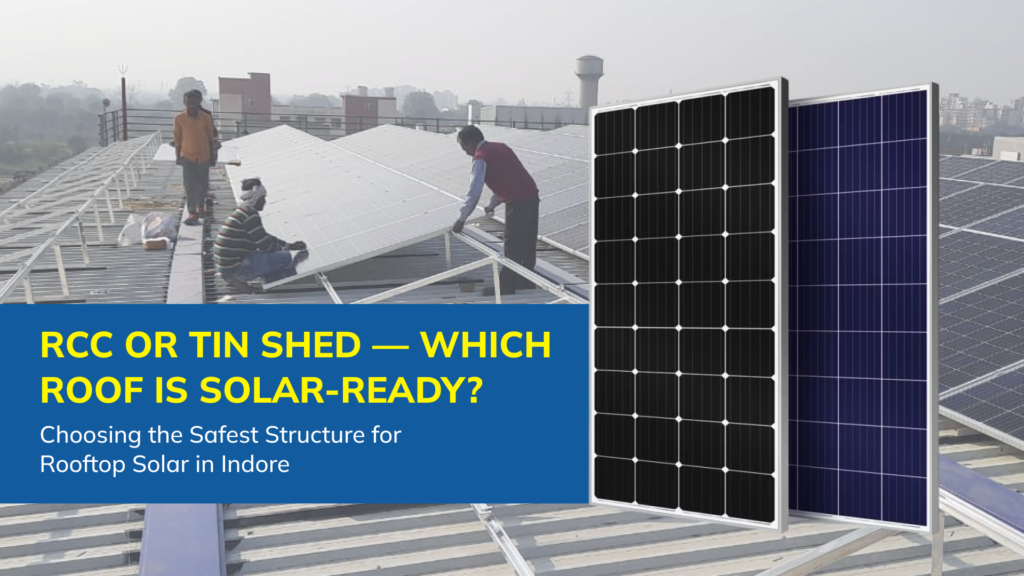
Not every rooftop in Indore looks the same, and the type of roof you have changes how solar panels are mounted, how long the structure lasts, and what it costs to install safely. The two most common roof types we encounter are RCC (reinforced cement concrete) and metal tin sheds, and each comes with its own mounting requirements. This guide from our residential solar panel team breaks down which structure suits which roof type, and what to check before installation begins.
Installing Solar on an RCC Roof
RCC roofs are the most common roof type for independent homes in Indore, and they are generally considered the most straightforward for solar installation because of their flat, load-bearing surface. Panels are typically mounted on elevated aluminium or galvanised steel structures anchored directly into the concrete, allowing for optimal tilt angle regardless of the roof’s natural slope. Most residential solar panel installations in Indore we handle are on RCC roofs, and the structural anchoring process is well standardised for this roof type.
Installing Solar on a Tin Shed Roof
Tin shed or metal sheet roofs are common on independent houses, warehouses, and some older residential structures, and they require a different mounting approach since panels are usually fixed directly onto the existing roof slope using specialised clamps rather than an elevated structure. This generally reduces mounting cost but also means the panel tilt angle is fixed by the roof’s existing slope, which can affect output slightly compared to an optimally angled RCC installation. If your tin shed roof has limited usable area, our guide on roof space required for 1kW, 3kW, 5kW, and 10kW systems helps you check whether your available area matches your target system size.
Which Structure Type Is Actually Safer?
Both RCC and tin shed roofs can safely support solar panels when the mounting structure and anchoring method are matched correctly to the roof type — the real risk comes from using the wrong hardware, not from the roof material itself. RCC roofs generally offer more flexibility in tilt and orientation, while tin sheds need extra attention to corrosion-resistant clamps and load distribution across roof trusses. Just as panel and inverter components carry specific coverage terms, as explained in our solar panel warranty guide, mounting structures also carry separate warranty terms worth confirming with your installer.
Waterproofing and Long-Term Durability
Improper anchoring on either roof type can lead to leaks over time, particularly on RCC roofs where bolts penetrate the concrete surface, or on tin sheds where repeated clamp movement can wear down the sheet material. A quality installer applies proper waterproofing sealant at every anchor point and inspects for existing roof damage before installation. If you are unsure whether your current roof condition is suitable for solar, contact our team for a structural assessment before committing to a system size.
Cost Differences Between the Two Roof Types
Tin shed installations are often marginally cheaper due to simpler mounting hardware, while RCC installations may cost slightly more because of the elevated structure required for optimal tilt, though this difference is usually small relative to overall project cost. Request a detailed cost breakdown as part of your solar panel installation in Indore quote so you can see exactly how mounting structure cost is factored in for your specific roof type.
Common Myths About Roof Type and Solar Safety
A persistent myth is that tin shed roofs cannot safely support solar panels at all, which is not accurate when the correct clamping system is used. Our article on common solar installation myths addresses several similar misconceptions that stop homeowners from considering solar even when their roof type is perfectly workable.
Conclusion
Whether your home has an RCC roof or a tin shed, solar installation can be done safely and effectively as long as the mounting structure, anchoring method, and waterproofing are matched correctly to your roof type. The right installer will assess your specific roof condition rather than applying a one-size-fits-all mounting approach. Learn more about our approach and experience on our About Us page before booking your site visit.
Frequently Asked Questions
Can solar panels be installed safely on a tin shed roof?
Yes, with the correct corrosion-resistant clamping system designed specifically for metal sheet roofs, tin sheds can safely support solar installations.
Is RCC roof installation always better than tin shed?
Not necessarily better, just different — RCC allows more flexibility in tilt angle, while tin shed installations are typically quicker and slightly less expensive to mount.
Does solar panel installation damage the roof?
Poorly executed installations can cause leaks or structural stress, but a professional installer with proper waterproofing and load assessment avoids this risk.
How do I know if my roof can bear the weight of solar panels?
A structural assessment during your site visit checks roof age, material condition, and load-bearing capacity before finalising the installation plan.
Do tin shed installations produce less power than RCC installations?
Output can be marginally lower if the fixed roof slope is not optimally angled toward the sun, though the difference is usually modest.
What maintenance differences exist between RCC and tin shed solar installations?
Tin shed installations may need more frequent clamp inspection for corrosion, while RCC installations mainly require periodic checks on anchor bolt sealant.
Not sure if your roof type is solar-ready? Contact Solar World Energies for a free structural assessment in Indore. Get your free consultation with Solar World Energies.