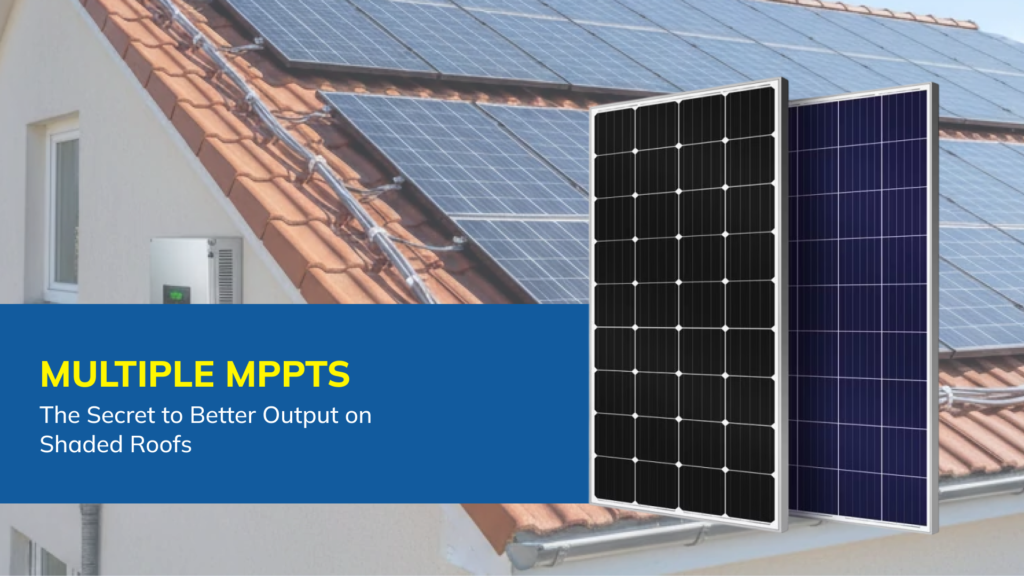
Ask most homeowners what MPPT means and you will get a blank look, yet it is one of the most important pieces of technology inside every solar inverter. MPPT, or Maximum Power Point Tracking, is what allows an inverter to continuously find the ideal operating point for maximum energy harvest from your panels. When people search for solar power installers near me, they rarely ask about MPPT count, but on a roof with even a small amount of shading, the number of MPPT inputs an inverter has can make a noticeable difference to daily generation.
This article explains what MPPT actually does, why a single MPPT input struggles on a partially shaded roof, and how choosing an inverter with multiple MPPT trackers can protect your system’s output. It is a decision our team factors into every residential solar panel design, especially on Indore rooftops with parapet walls, water tanks, or nearby trees that cast partial shadows during parts of the day.
What Is MPPT and How Does It Work
A solar panel’s power output changes constantly through the day as sunlight, temperature, and cloud cover shift, and each of these conditions has a slightly different voltage and current point at which the panel produces its maximum power. MPPT is the inverter’s built-in algorithm that continuously scans for this optimal point, several times per second, and adjusts the electrical load to match it. Without MPPT, an inverter would operate at a fixed point that is only correct under one specific condition, wasting a meaningful share of available energy for the rest of the day — which is exactly why inverter selection is treated as a technical decision, not an afterthought, in every home solar panel in indore project we design.
Single MPPT vs Multiple MPPT Inverters
An inverter with a single MPPT input treats every string connected to it as one combined unit and searches for one maximum power point across all of them together. This works well when every string receives identical, unshaded sunlight, which is common on a simple, open, single-facing roof, similar to the layouts discussed in our comparison of string, micro, and hybrid inverter types. An inverter with multiple MPPT inputs, on the other hand, tracks each connected string independently, letting one string operate at its own ideal point even if a neighbouring string is partially shaded or facing a different direction.
When a Single MPPT Input Is Enough
If your roof is a single, open, unobstructed surface with all panels facing the same direction and no shading at any point in the day, a single MPPT inverter can perform just as efficiently as a multi-MPPT unit, often at a lower cost. This is common on newly constructed, unobstructed terraces without surrounding structures, and it is a scenario our team confirms only after a physical inspection, not from a photograph or a rough description shared over a call to a solar company in indore.
When You Need Two or More MPPT Trackers
The moment your roof has more than one usable orientation, a chimney, a water tank, a parapet wall, or a neighbouring building that casts a shadow for part of the day, multiple MPPT inputs start to matter. Each affected string can then be tracked and optimised on its own, rather than letting the shaded portion drag down panels that are still receiving full sunlight, which is a common situation for anyone searching for solar system installation near me in a dense residential neighbourhood.
How Partial Shading Impacts a Solar String
When even one panel in a series string is shaded, its current output drops sharply, and because every panel in a series string must carry the same current, the entire string’s output is pulled down to match the weakest, most shaded panel. On a single-MPPT inverter, this shaded string also drags down any other string sharing that same MPPT tracker, compounding the loss. This cascading effect is one of the reasons careful rooftop solar installation in indore planning treats shading analysis as a core part of the design process rather than an afterthought.
Real Rooftop Scenarios Where Multiple MPPTs Help
A common Indore scenario is a roof with an overhead water tank that casts a moving shadow across part of the array during specific hours. Wiring the shaded panels into a separate string on their own MPPT tracker isolates that loss to just those panels, instead of pulling down the entire system’s output. The same principle applies to L-shaped roofs with panels facing two different directions, or to homes near taller neighbouring buildings — situations we account for when helping households understand how much roof space their system will realistically use across the full available area.
Choosing the Right Inverter for Your Roof
The right MPPT configuration depends entirely on your roof’s shape, orientation, and shading pattern, which is why we carry out a physical shading assessment before recommending an inverter model. You can reach our team through our Contact Us page to schedule this assessment, and the same shading-aware approach applies whether the project is a home rooftop or a larger commercial solar panel system with multiple roof sections.
Cost is also part of this decision. A multi-MPPT inverter typically carries a modest premium over a single-MPPT model of the same capacity, and for a completely open, unshaded roof that premium may not be worth paying. For roofs with any obstruction at all, however, the additional generation recovered over the system’s 25-year lifespan usually outweighs the small upfront difference many times over, which is one of the trade-offs we walk through with every household evaluating residential solar panel options in Indore.
Conclusion
MPPT count is rarely mentioned in a sales conversation, yet it can be the difference between a system that performs consistently despite a partially shaded roof and one that underperforms every single day because of a fixed shadow no one accounted for. If you are searching for solar system installation near me and comparing quotes, ask specifically how many MPPT inputs each proposed inverter has and why, and browse our FAQ page for more technical questions worth raising before you sign a contract.
Frequently Asked Questions
What does MPPT stand for in solar inverters?
MPPT stands for Maximum Power Point Tracking, the technology that continuously adjusts an inverter’s operating point to extract the most power available from the connected panels.
Do I need a multiple MPPT inverter for a small rooftop?
Only if your roof has shading, multiple orientations, or obstructions like water tanks and parapet walls. A fully open, single-direction roof can perform well with one MPPT input.
Does partial shading really affect the whole string?
Yes. Because panels in a series string share the same current, one shaded panel can pull down the output of every other panel in that same string.
Are multi-MPPT inverters more expensive?
They typically cost somewhat more than single-MPPT models, but on a roof with any shading, the extra generation recovered usually outweighs this difference over time.
Can I add a second MPPT string later if my roof gets partially shaded by new construction next door?
This depends on your existing inverter’s available MPPT inputs and DC capacity, which is best confirmed through a technical site visit.
How do installers decide how many MPPT inputs a roof needs?
By physically assessing roof orientation, obstructions, and shading patterns throughout the day before selecting an inverter model.
Have a roof with a water tank, parapet wall, or partial shading you are worried about? Talk to Solar World Energies about the right MPPT configuration for your specific rooftop.