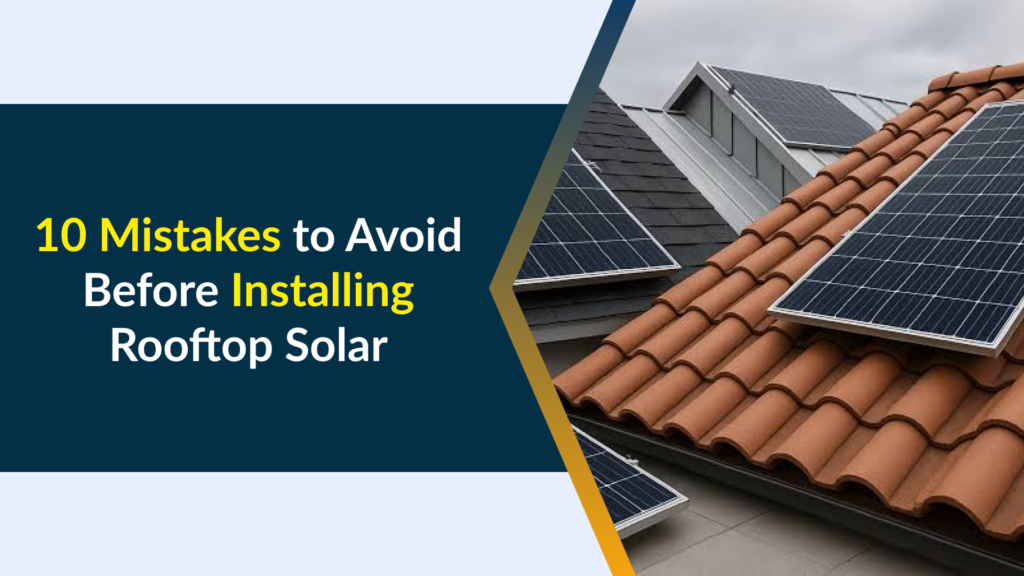
Rooftop solar is one of the best long-term investments a homeowner can make, but the difference between a system that performs well for 25 years and one that disappoints within the first two often comes down to decisions made before installation even begins. Over the years, our team at Solar World Energies has seen the same avoidable mistakes repeat across projects. Here are the ten most common ones, and how to steer clear of each.
1. Not Checking the Right System Size Before Asking for Quotes
Many homeowners request quotes before they know how many kW they actually need, which makes it impossible to compare proposals fairly. Work out your consumption-based sizing first using our guide on how to choose the right solar system size for your home, so every quote you receive can be compared on equal terms.
2. Ignoring Roof Shading and Orientation
A rooftop that looks spacious on paper can still underperform badly if a water tank, neighbouring wall, or tree casts a shadow across even a small section of the panels for part of the day. Before finalising panel placement, review our breakdown of roof space required for different system sizes and insist on a shading assessment as part of your site visit.
3. Choosing the Cheapest Quote Instead of the Right Installer
The lowest quote often reflects inferior components, thinner cabling, or a lack of after-sales support rather than genuine efficiency. Our article on how to choose the best solar company in Indore outlines the seven factors that actually determine long-term value, well beyond the upfront price tag.
4. Skipping the Net Metering Paperwork
Without a properly registered net metering connection, you cannot get credited for surplus power your system exports to the grid, which quietly erodes your expected savings. Our detailed explainer on net metering in Indore covers exactly what documentation is required and how the credit system works.
5. Not Comparing On-Grid, Hybrid, and Off-Grid Options
Homeowners frequently install an on-grid system without realising it will not supply power at all during a grid outage, which is a common source of disappointment. Read our comparison of what happens during a power cut across on-grid, hybrid, and off-grid solar before deciding which configuration matches your backup expectations.
6. Overlooking Panel and Inverter Warranty Terms
Not all warranties are equal — a 25-year panel warranty typically covers manufacturing defects and performance degradation separately, and inverter warranties are usually much shorter than panel warranties. Our guide on solar panel warranty explained breaks down the difference between product and performance warranty so you know exactly what you are covered for.
7. Forgetting About Future Load Increases
Sizing a system exactly to today’s consumption leaves no headroom for an electric vehicle, an additional air conditioner, or a growing household. If an EV purchase is even a possibility in the next few years, review our article on whether solar panels can power an EV charger at home while your system is still being designed.
8. Not Verifying Installer Credentials and Past Projects
Solar installation quality varies significantly between companies, and a lack of visible track record is a warning sign. Before signing a contract, check the installer’s experience and certifications — you can review our own background and completed projects as an example of what to look for in a credible installer.
9. Missing Out on Government Subsidy Benefits
Many homeowners either apply incorrectly for the central subsidy or assume they are ineligible without checking. Our complete guide to the PM Surya Ghar Yojana subsidy scheme explains the eligibility criteria and application process so you do not leave money on the table.
10. Not Asking About After-Sales Service and Maintenance
A solar system needs occasional cleaning, monitoring, and servicing to perform at its rated capacity over 25 years, yet many homeowners never ask what after-sales support is included before signing. Before you commit, contact our team and ask specifically what maintenance and monitoring support comes with your installation package.
Conclusion
Most solar installation regrets are not caused by the technology itself but by decisions skipped during the planning stage. Take the time to size your system correctly, vet your installer, and understand your warranty and subsidy paperwork, and rooftop solar will deliver exactly what it promises. Browse more homeowner guides on our residential solar panel blog before you begin your own installation journey.
Frequently Asked Questions
What is the single most common solar installation mistake?
Sizing the system incorrectly — either too small to meaningfully reduce the bill, or too large for the available roof space and consumption pattern.
Is the cheapest solar quote ever the right choice?
Rarely. Cheaper quotes usually involve lower-tier components or reduced after-sales support, which costs more in the long run through lower output or repairs.
Do I need net metering if I only want backup during power cuts?
Net metering is separate from backup capability; even backup-focused hybrid systems generally still benefit from net metering registration for grid-connected operation.
Can I add battery backup after installing an on-grid system?
In many cases a hybrid inverter and battery can be added later, but it is more cost-effective to plan for this upfront if backup is a likely future need.
How do I check if a solar company is trustworthy?
Look at years in operation, completed project history, warranty transparency, and whether they offer a documented after-sales service plan.
Does missing the subsidy deadline mean I lose the benefit permanently?
Subsidy schemes are periodically updated, so it is best to confirm current eligibility windows directly with your installer before assuming you have missed out.
Avoid these mistakes altogether — get a professional, no-obligation assessment from Solar World Energies before you sign any contract. Get your free consultation with Solar World Energies.