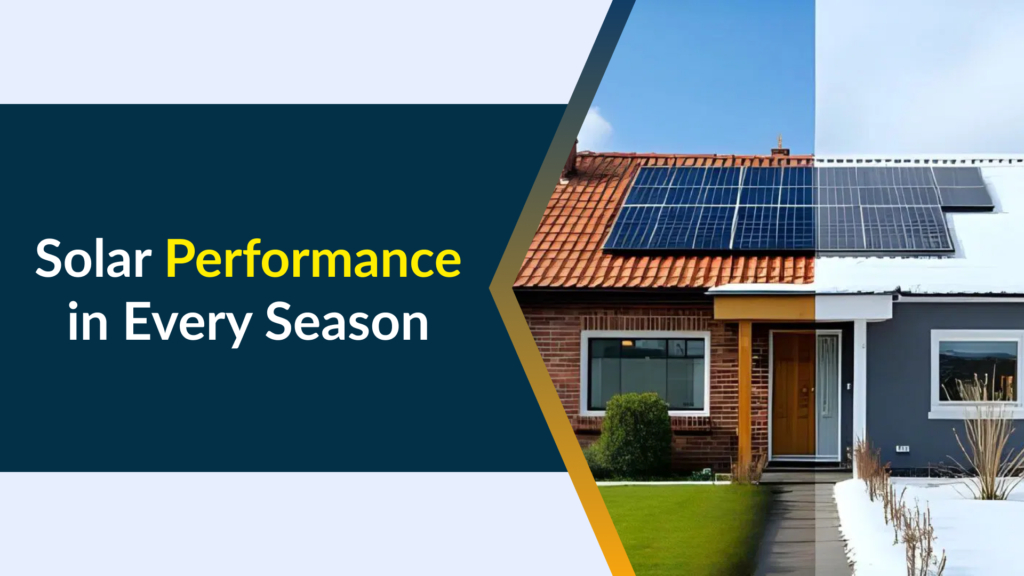
Madhya Pradesh, and Indore in particular, receives some of the strongest average solar irradiance in India, which is exactly why rooftop solar has become such a popular investment here. But irradiance is not constant across the year, and understanding how your system actually performs through summer heat, monsoon cloud cover, and cooler winter days helps set realistic expectations rather than relying on a single optimistic annual average figure quoted in a sales brochure.
This guide walks through what actually happens to solar generation in each of the three seasons, based on how panels physically respond to heat, sunlight intensity, and cloud cover, so you know what a normal month looks like versus what should genuinely concern you on your residential solar panel system.
Summer Performance: Strong Sunlight, But Not Without Tradeoffs
Summer in Madhya Pradesh brings the year’s strongest and most consistent sunlight, and daily generation from a well-installed residential solar panel system is typically at its highest during these months due to longer daylight hours and intense irradiance. This is often the season sales estimates are quietly based around, which can create an overly optimistic picture of year-round output.
There is a lesser-known tradeoff here though. Solar cells actually lose a small percentage of electrical efficiency as their surface temperature climbs well above standard test conditions, meaning a panel baking on a hot Indore rooftop in peak May heat produces slightly less power per unit of sunlight than the same panel would in cooler, equally sunny conditions. In practice, the sheer intensity and duration of summer sunlight in the region still usually outweighs this heat penalty, so total daily generation remains strong, but it explains why output does not scale up perfectly linearly with rising temperatures, a nuance our team explains during every solar panel installation in Indore consultation.
Monsoon Performance: The Season Homeowners Worry About Most
Monsoon is genuinely the season with the most noticeable dip in generation, since heavy cloud cover blocks a large share of direct sunlight that panels rely on. That said, solar panels do not stop producing electricity entirely under clouds, they generate reduced output from diffuse light even on overcast days, just at a meaningfully lower rate than a clear summer or winter afternoon, a pattern factored into every home solar panel system we design.
A well-designed system anticipates this. When our team calculates expected annual generation during a solar panel installation in Indore consultation, monsoon months are already factored into the yearly average rather than treated as an unexpected shortfall, which is one reason your actual bill savings should be evaluated annually rather than by comparing a single rainy month to a single sunny one.
Winter Performance: Shorter Days, But Efficient Generation
Why Cooler Weather Can Actually Help
Winter in Indore brings shorter daylight hours, which naturally reduces the total window available for generation each day. However, cooler ambient and panel temperatures actually improve electrical efficiency compared to peak summer heat, partially offsetting the shorter daylight window. Combined with generally clear winter skies across the region, daily output often holds up better than people expect for this season, as reflected in generation data across our residential solar panel in Indore installations.
How Seasonal Variation Affects Your System Sizing
Because generation naturally fluctuates across the year, a system genuinely sized to meet your household or business needs should be based on annual average generation, not the best month of the year. This is a detail our commercial solar panel and residential clients alike appreciate once it is explained clearly, since it prevents disappointment when a single monsoon month’s bill savings look smaller than a peak summer month’s.
Our own generation projections, discussed further in our guide on why rooftop solar is a smart investment, are always built around realistic seasonal cycles specific to Madhya Pradesh rather than a flat theoretical maximum that ignores real weather patterns.
Maintenance Tips That Change With the Season
Dust accumulation is typically worst in the dry pre-monsoon months, so panels often benefit from more frequent cleaning during this stretch to maintain peak output. Monsoon rainfall usually keeps panels naturally cleaner, though it is still worth checking for debris buildup around mounting structures after heavy storms. In winter, morning dew can temporarily reduce output until it evaporates, which is a normal daily pattern rather than a system issue, something our FAQ page also addresses for new solar owners.
For homeowners comparing generation data against expectations set during their initial residential solar panel consultation, keeping a simple monthly log makes it far easier to spot a genuine performance issue versus a normal seasonal dip.
Setting the Right Expectations From Day One
The single biggest source of frustration we see among solar owners is not seasonal variation itself, it is not knowing to expect it in the first place. A transparent installer should walk you through month-by-month generation estimates during the sales process, not just an annual average, so summer highs and monsoon dips are already part of your mental model before the solar panel installation in Indore is even complete.
If you have questions about how seasonal patterns affect a specific system size or roof, our FAQ page covers several related generation questions, and our team is happy to share realistic month-by-month projections for your property.
Conclusion
Solar generation in Madhya Pradesh naturally rises and falls with the seasons, strongest through summer, reduced but not absent during monsoon, and steadier than expected through winter thanks to cooler, more efficient panel temperatures. Understanding this cycle upfront is the difference between realistic satisfaction and unnecessary worry over a single cloudy month. Reach out to our team for a seasonal generation estimate built specifically around your rooftop and location.
Frequently Asked Questions
Does solar generation drop significantly during monsoon in Madhya Pradesh?
Yes, generation typically drops noticeably during heavy overcast days in the monsoon, since panels rely on both direct and diffuse sunlight, but they still produce some electricity even under cloud cover, just at a reduced rate compared to clear skies.
Do solar panels work less efficiently in extreme summer heat?
Counterintuitively, yes to some degree. Panel efficiency actually decreases slightly as cell temperature rises above a certain point, so while summer in Madhya Pradesh has the strongest overall sunlight, extreme rooftop heat can slightly reduce per-panel efficiency even as total daily generation often remains highest due to longer daylight hours.
Is winter a bad season for solar power in Indore?
Not at all. Winter days are shorter, but cooler panel temperatures actually improve electrical efficiency, and Indore’s generally clear winter skies mean daily generation often stays fairly strong despite the shorter daylight window.
Should I clean my solar panels more often during a particular season?
Yes, the pre-monsoon dry and dusty months typically require more frequent cleaning, since accumulated dust can meaningfully reduce output, while the monsoon itself often keeps panels naturally cleaner due to regular rainfall.
How much annual generation loss should I expect from seasonal variation?
This varies by system and roof, but many well-designed systems in Madhya Pradesh are sized with seasonal variation already factored into the annual generation estimate, so a monsoon dip is a normal part of the yearly cycle rather than a system fault.
Can hail or heavy monsoon storms damage solar panels?
Quality panels are built to withstand hail and heavy rainfall within tested limits, though extreme storm damage is generally excluded from standard manufacturer warranties, which is why site-appropriate mounting and structural checks matter during installation.
Does a tilted panel angle help with seasonal performance in MP?
Yes, the mounting angle is typically optimised based on your location’s latitude to balance performance across all three seasons, rather than favouring just one, and this is something your installer should calculate specifically for your site rather than use a generic angle.
Want a solar system sized realistically for Indore’s full seasonal cycle, not just an optimistic sales estimate? Contact Solar World Energies for a generation estimate based on your actual rooftop and local condition