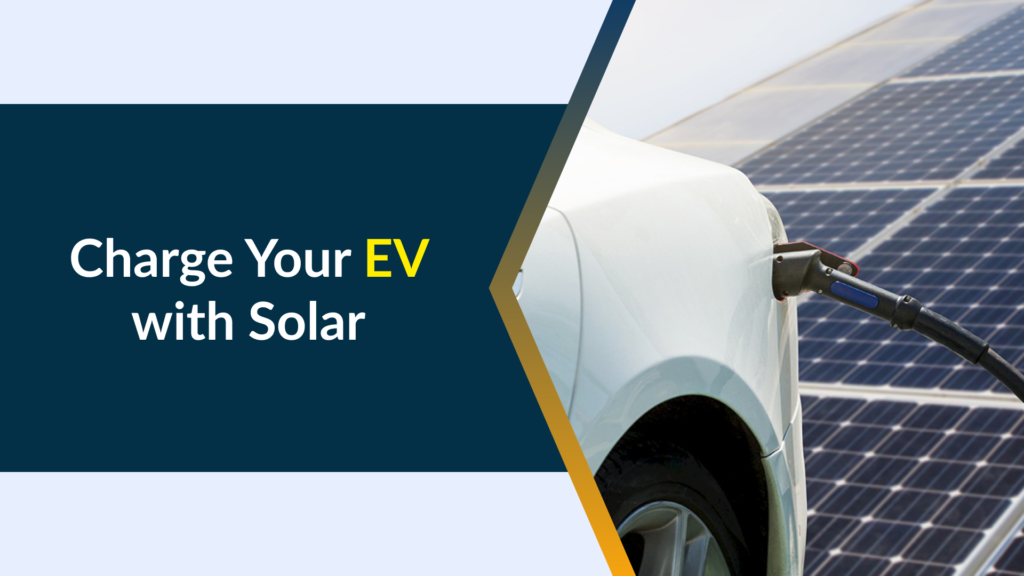
Electric vehicles are becoming a common sight on Indore’s roads, and a question we hear constantly from homeowners exploring rooftop solar is simple: can my solar panels actually charge my car? The honest answer is yes, but only if the system is sized correctly for it. Charging an EV adds a meaningful new load to your home’s electricity consumption, and treating it as an afterthought after your solar system is already installed often leads to disappointment.
This guide walks through exactly how EV charging interacts with a home solar setup, what capacity you actually need, and how to plan for it whether you already own an EV or are simply future-proofing your residential solar panel installation.
How Home EV Charging Actually Works With Solar
A standard home EV charger, often called a Level 2 or AC charger, typically draws between 3.3 kW and 7.2 kW depending on the model and your home’s electrical connection. Your solar panels generate DC electricity during daylight hours, which is converted to usable AC power by your inverter, the same setup that already powers your lights, fans, and appliances. If your panels are generating more than your household is consuming at that moment, that surplus can be directed toward EV charging instead of being exported to the grid, a balance our team calculates precisely during any residential solar panel planning session.
The catch is timing. Solar generation peaks around midday, while many people plug in their EV in the evening after returning home, which is exactly when panels are winding down for the day. Getting real benefit from solar-powered EV charging usually means either charging during daylight hours when possible or investing in battery storage to shift that stored energy to the evening, something worth discussing with the Solar World Energies team early in your planning.
How Much Extra Solar Capacity Does EV Charging Need?
This is the number most people underestimate. A household that already sized its solar system purely around lights, fans, refrigerator, and air conditioning load typically has very little daytime surplus left over. Adding a 3.3 kW charger running for even two to three hours a day can require an additional 3 to 5 kW of panel capacity on top of your existing system to meaningfully offset that charging from sunlight, depending on your local irradiance and roof orientation, as detailed further in our home solar panel guide.
This is precisely why we recommend discussing EV plans upfront during your solar panel installation in Indore consultation rather than after the system is live. Retrofitting additional panels later is possible, but planning inverter and wiring capacity for future expansion from day one is far more cost-efficient than an add-on project two years down the line.
Sizing Examples for Different Household Situations
Occasional City Driving
If your EV mostly covers short daily commutes within Indore, your charging load is comparatively light, and a modest 2 to 3 kW addition to your existing residential system, paired with our residential solar panel range, is often enough to cover most of that consumption from solar.
Daily Long-Distance Driving
Households covering longer daily distances draw significantly more charging energy, and here it makes sense to size the solar addition around your actual monthly driving pattern rather than a generic rule of thumb, which is something our team calculates during a proper solar panel installation in Indore site visit.
Using Net Metering to Offset Evening EV Charging
For most homes without battery storage, net metering is the practical bridge between daytime solar generation and evening EV charging. As explained in our net metering guide for Indore, any solar units you export to the grid during the day earn credits that offset the units you draw back at night, meaning your EV can effectively run on solar-generated credits even if the actual electrons come from the grid after sunset.
This is a far more accessible solution than battery storage for most households, since it uses infrastructure that is already standard with a grid-tied residential solar panel in Indore connection, without the added upfront cost of batteries.
What About Businesses and Commercial EV Fleets?
The same principles scale up for offices, showrooms, or businesses running electric two-wheeler or four-wheeler fleets. A correctly sized commercial solar panel system can offset a meaningful share of daytime fleet charging costs, which adds up quickly for businesses charging multiple vehicles on a working schedule that aligns naturally with solar generation hours.
Planning Your Solar-Plus-EV System the Right Way
Before adding a charger to an existing solar setup, or sizing a new system with EV charging in mind, a proper load audit is the only reliable starting point. This means listing your household’s existing daily consumption, your typical EV charging pattern, and your roof’s usable area, then sizing panels and inverter capacity with some headroom built in. Guessing at this stage usually means either an undersized system that barely dents your grid dependence, or an oversized one that adds cost without proportional benefit, which is exactly what a proper home solar panel audit is meant to prevent.
If you already have questions about how this fits your specific home, our FAQ page covers several related sizing and net metering questions, and our team is always happy to walk through the actual numbers for your rooftop.
Conclusion
Solar panels absolutely can power an EV charger at home, but the honest answer requires proper sizing rather than assuming your existing rooftop system has spare capacity it was never designed to carry. Whether you are planning a new installation or expanding an existing one, get the math right from day one. Learn more about our approach to residential solar, or get in touch to have our team assess your home and driving pattern together.
Frequently Asked Questions
Can my existing home solar system charge my EV directly?
It depends on your system’s spare daytime capacity. If your panels already generate close to your household’s full daytime consumption, adding an EV charger without additional capacity will mean the car simply pulls more from the grid rather than from solar. Most homes need extra panel capacity added specifically to cover EV charging.
How many solar panels do I need to charge an EV at home?
As a rough guide, a standard 3.3 kW AC home charger running for a few hours needs roughly an additional 3 to 4 kW of solar capacity beyond your normal household load to cover most of that charging from sunlight rather than the grid, though the exact number depends on your daily driving distance and existing consumption.
Is it better to charge my EV during the day or at night with solar?
Charging during peak sunlight hours, typically late morning to mid-afternoon, lets you use solar generation directly rather than importing costlier grid power at night, assuming you are home or can schedule charging through a timer or smart charger.
Do I need a special solar inverter to support EV charging?
Not necessarily a special one, but your inverter and existing wiring need enough spare capacity to handle the additional load safely. This is best confirmed by a site assessment rather than guessed, since panel type, inverter sizing, and your home’s electrical panel all factor in.
Can net metering help offset EV charging costs?
Yes. Under net metering, any solar units you generate but do not use during the day are exported to the grid and credited, which can offset the units you draw back at night to top up your EV, effectively spreading your solar generation across the full day.
Will adding an EV charger increase my solar system’s payback period?
It can shift the math, but usually favourably, since EV charging replaces a recurring fuel cost with a largely fixed solar generation cost. Many homeowners find that combining EV ownership with a correctly sized solar system shortens the overall payback on both investments together.
Can a solar system with battery storage charge my EV at night too?
Yes, if your system includes battery storage, stored daytime solar energy can be used to charge your EV after sunset, though this requires a hybrid inverter setup and a larger upfront investment than a standard grid-tied system.
Considering an EV and wondering if your roof can support it? Talk to Solar World Energies about correctly sizing a residential solar system that covers both your home and your electric vehicle.